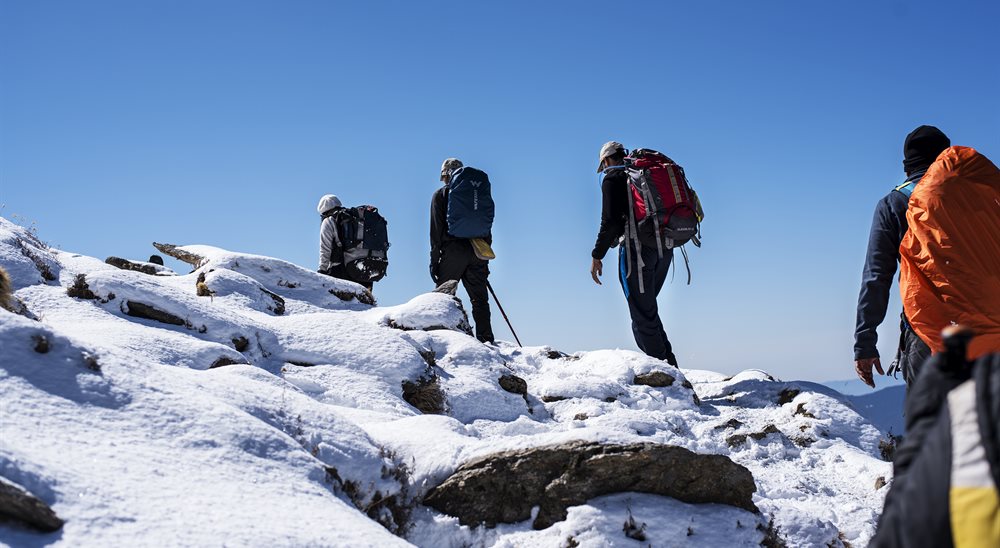
Nestled in the heart of Uttarakhand’s rugged terrain, the Brahmatal Trek has emerged as a sought-after adventure for trekking enthusiasts, particularly those embarking on their Himalayan journeys. This captivating trail weaves through landscapes of unparalleled beauty, offering a harmonious blend of glacial lakes, verdant oak and rhododendron forests, vast meadows, and awe-inspiring vistas of the majestic Nanda Ghunti and Trishul peaks.
For beginners seeking an exhilarating yet accessible introduction to the Himalayas, the Brahmatal Trek presents an ideal opportunity. Its well-defined trails and varying terrains make it a perfect choice for those eager to test their mettle while immersing themselves in nature’s grandeur. In this comprehensive guide, we delve into the trek’s intricacies, equipping you with the knowledge and skills necessary to embark on this unforgettable adventure.
At the outset, it’s essential to understand the Bikat Rating Scale, a comprehensive system designed to evaluate the difficulty level of treks and expeditions. This scale takes into account the geographical and climatic conditions of each trail, providing trekkers with a reliable gauge for assessing their preparedness.
The Brahmatal Trek is classified as a Level 3 trek on the Bikat Rating Scale, making it an ideal starting point for beginners who are confident in their fitness levels. For those unsure of their abilities, it is recommended to commence with Level 1 or Level 2 treks, which serve as stepping stones to more challenging adventures.
The Brahmatal Trek commences from the quaint village of Lohajung, perched at an altitude of 2,300 meters. Each day, trekkers will embark on a journey spanning 5 kilometers or more, unveiling a tapestry of diverse landscapes and breathtaking vistas.
The first day’s trek from Lohajung to the Gujrani Campsite sets the tone for the adventure ahead. The initial 3 kilometers offer a gentle introduction, following well-laid-out pathways that lead to the picturesque Begum Top. From this vantage point, the Lohajung Village unfolds below, providing a panoramic view that sets the stage for the journey to come.
Beyond Begum Top, the trail meanders through enchanting oak and rhododendron forests, eventually leading to the Gujrani Campsite at an elevation of 2,750 meters. This relatively easy stretch allows trekkers to acclimatize while savoring the beauty of the surrounding flora.
The second day’s trek presents a more challenging endeavor, as the distance to be covered nearly doubles. This is the day when trekkers will be treated to their first glimpse of the Bekaltal Lake, a pristine body of water nestled just 2 kilometers away from the Gujrani Campsite. The path to Bekaltal is easy to moderate, with numerous twists and turns that add to the adventure.
From Bekaltal, the trail ascends steadily, gaining elevation and traversing a sandy terrain that extends for 4 kilometers. At the end of this stretch lies the breathtaking Talindi Top, a beautiful meadow that offers a tantalizing glimpse of the majestic Trishul Peak I.
Continuing onwards, trekkers will reach Jandi Top, a mere kilometer from Talindi Top. This vantage point sets a stunning stage, allowing for unobstructed views of the coveted Trishul 1, 2, and Nanda Ghunti peaks. After Bekaltal, Jandi Top is the last point to replenish water supplies from local dhabas (eateries).
From Jandi Top, the trail descends for 4 kilometers, leading to the Brahmatal Campsite. The serene Brahmatal Lake lies a mere 500 meters from the campsite, beckoning trekkers to take a leisurely stroll and soak in its tranquil beauty during the evening hours.
The third day begins with an early start, as trekkers embark on a 3-kilometer ascent to the summit of Brahmatal. The trail maintains a steady and constant incline, challenging trekkers’ endurance while rewarding them with breathtaking vistas along the way.